You know, sometimes I look at the incredible innovations popping up everywhere and I can’t help but feel a little awestruck. We humans are pretty clever, right?
But then I remember where some of the *best* ideas actually come from, and it’s not always in a lab or a Silicon Valley startup. It’s often from the original genius, Mother Nature herself!
I’ve personally always been fascinated by how effortlessly nature solves complex problems, whether it’s a tiny seed finding its way to grow in harsh conditions or a bird’s wing perfectly designed for flight.
It just makes you wonder, doesn’t it? This isn’t just a quirky interest; it’s a booming field called biomimicry, where we literally learn from and imitate nature’s time-tested designs and strategies to tackle our own challenges, from sustainable energy to advanced materials.
It’s truly incredible how many groundbreaking innovations, like the self-cleaning surfaces inspired by lotus leaves or aerodynamic bullet trains mimicking kingfisher beaks, are emerging from this concept.
As we face ever-growing global issues like climate change and resource scarcity, looking to nature’s 3.8 billion years of R&D isn’t just smart; it’s becoming absolutely essential for creating technologies that are not only efficient but also truly sustainable and regenerative.
The exciting part is seeing how this approach is revolutionizing everything from architecture to robotics and even medicine, paving the way for a more harmonious future.
It’s about shifting our mindset from simply extracting from nature to collaborating with it. Exactly how are we achieving these incredible feats by simply looking to the natural world?
Let’s dive in and explore some truly mind-blowing examples and future predictions.
Nature’s Master Blueprints for Innovation
It’s just wild to think about how many brilliant solutions are out there, just waiting for us to discover them in plain sight. Nature has truly mastered efficiency and resilience over billions of years, and that’s exactly what we need for our modern challenges.
I’ve seen so many incredible examples where scientists and engineers have peered into the natural world, from the microscopic structures of leaves to the majestic flight of birds, and come away with game-changing ideas.
It’s like nature hands us the cheat codes to sustainable design! This isn’t just about making things *look* natural; it’s about understanding the deep principles behind how living systems operate and then applying those principles to our own technology.
Honestly, it feels less like invention and more like rediscovery, doesn’t it? It makes me feel incredibly optimistic about the future when I see how much we can learn from the original innovators.
The beauty is that these solutions often lead to less waste, less energy consumption, and a much lighter footprint on our precious planet. It’s a win-win, really.
Unlocking Nature’s Energy Secrets
One area where biomimicry is really shining is in energy. We’re constantly striving for more efficient and sustainable ways to power our lives, and guess what?
Nature’s been doing it flawlessly forever! Take photosynthesis, for instance. Plants convert sunlight into energy with such elegance, and now researchers are developing solar panels that mimic this exact process, improving how well they capture and convert solar energy.
Imagine, solar cells designed with the same chlorophyll-like structures that leaves use – it’s literally making our technology more “alive” in a sense.
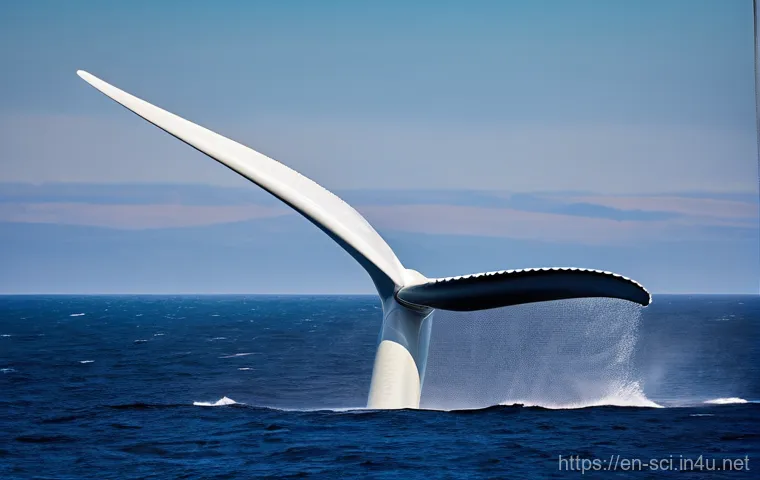
Then there are wind turbines. You’d think smooth blades are best, right? But some incredibly smart folks looked at humpback whale fins, which have these bumpy protrusions called tubercles.
Applying that design to wind turbine blades has actually improved aerodynamics, allowing them to capture more wind and convert kinetic energy more efficiently!
It’s just mind-blowing how a little tweak inspired by nature can lead to such significant gains.
Sustainable Structures Inspired by Ecosystems
And it’s not just about tiny parts; entire structures can take a cue from nature. I’m always amazed by how buildings are starting to breathe like living organisms.
For example, some architects are looking at termite mounds – yes, termite mounds! – to create natural ventilation systems for buildings. The Eastgate Centre in Zimbabwe is a fantastic example, mimicking the way termites maintain near-constant temperatures inside their mounds, drastically reducing the need for air conditioning and cutting energy consumption.
It’s such an elegant solution to a very human problem. Similarly, designers are looking at how a forest floor creates a self-sustaining ecosystem for inspiration on things like carpet tiles, reducing waste by creating random patterns that always fit together.
It truly changes your perspective on what a building can be, transforming it from a static structure into something that interacts harmoniously with its environment.
Biomimicry in Everyday Objects and Breakthrough Innovations
Sometimes the simplest ideas, the ones we interact with every day, are the most profound examples of biomimicry. It’s like nature just whispers solutions to us when we’re observant enough to listen.
I mean, who would’ve thought that looking at a common burr could lead to something as ubiquitous as Velcro? That’s exactly what happened when George de Mestral noticed how those tiny hooks clung to his dog’s fur and his clothes.
It just goes to show you that genius isn’t always about complex equations; sometimes it’s about paying attention to the world around you and asking, “How does nature do that?” These seemingly small inspirations have an enormous impact, making our lives easier, our products more durable, and often, more sustainable.
It truly makes me wonder what other everyday inconveniences we could solve if we just spent a little more time observing the patterns and mechanisms that already exist.
From Kingfishers to Bullet Trains
My absolute favorite example, and one that just makes me smile every time I think about it, is the Japanese bullet train. Engineers were facing a huge problem with sonic booms as the train exited tunnels at high speeds.
It was loud and inefficient! The chief engineer, who happened to be an avid birdwatcher, found his answer in the kingfisher’s beak. This bird dives into water with almost no splash because of its perfectly streamlined shape.
By redesigning the train’s nose to mimic the kingfisher’s beak, they not only solved the noise problem but also made the train faster and more energy-efficient.
How cool is that? It’s a perfect illustration of how observing specific adaptations in nature can lead to incredibly effective engineering solutions. It shows that sometimes, the best way forward isn’t to invent something entirely new, but to adapt what’s already perfected.
The Lotus Effect and Self-Cleaning Surfaces
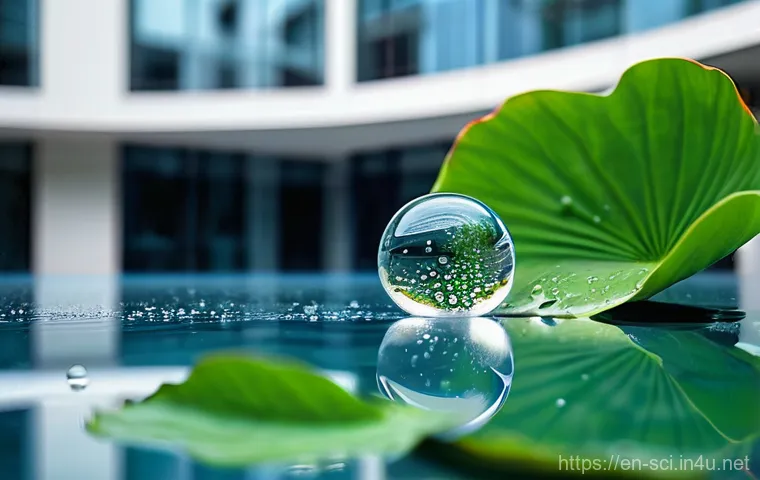
Have you ever noticed how lotus leaves always look spotless, even in muddy environments? It’s not magic; it’s biomimicry waiting to happen! These leaves have a unique microscopic texture that makes them superhydrophobic, meaning water droplets roll right off, picking up dirt and contaminants as they go.
This “Lotus Effect” has inspired self-cleaning surfaces for buildings, paints, and even surgical instruments. Imagine buildings that practically clean themselves, significantly reducing maintenance costs and the use of harsh chemicals.
We’re even seeing facades coated with nanostructured materials that mimic lotus leaves, drastically cutting down on water usage and cleaning costs for large structures.
It’s a brilliant example of how a simple biological mechanism can be translated into a practical, eco-friendly solution that saves resources and money.
It’s truly inspiring to see nature’s genius applied to our everyday lives.
The Natural World’s Influence on Robotics and Medicine
It’s easy to think of robotics and medicine as fields dominated by cold, hard technology, but I’ve been absolutely captivated by how much inspiration these cutting-edge areas are drawing from the squishy, messy, and incredibly clever world of biology.
Seriously, when you start looking at how animals move, how our bodies heal, or how cells interact, you realize nature has already cracked so many complex codes.
I find it personally thrilling to see engineers designing robots that swim like fish or doctors creating medical devices inspired by insects. It really challenges the idea that technology and nature are separate; instead, they’re becoming deeply intertwined in the most fascinating ways.
This fusion isn’t just about making things look cool; it’s about making them more efficient, more adaptive, and ultimately, more beneficial for human health and our interaction with the environment.
Robots Learning from the Animal Kingdom
Robotics is absolutely buzzing with biomimicry right now. We’re moving beyond just rigid, clunky machines and into a realm where robots are flexible, adaptable, and incredibly nimble, all thanks to our animal friends.
Take soft robotics, for instance – researchers are designing robotic arms that mimic the incredible flexibility and dexterity of an octopus’s tentacles, allowing them to handle delicate objects or navigate complex, confined spaces with ease.
This is a game-changer for precision surgery! And how about robots that can climb walls or ceilings? They’re often inspired by gecko feet, which have millions of tiny hairs that allow them to stick to almost any surface without leaving residue.
Even tiny drones are being inspired by the flight of bees, developing autonomous swarming behaviors that could revolutionize inspection and monitoring.
It’s like we’re building a whole new generation of machines that move and interact with the world with a natural grace we never thought possible.
Nature’s Healing Touch in Medical Innovation
In medicine, biomimicry is literally saving lives and improving health in ways that feel almost futuristic. I’ve always been amazed by the intricate design of the human body, but when we look beyond ourselves to the broader animal kingdom, the solutions are endless.
For example, imagine surgical glue inspired by the super-strong adhesive produced by geckos, creating biodegradable bandages for organ and tissue repair.
Or catheters that can navigate the labyrinth of blood vessels with minimal invasion, mimicking how electric fish generate electrical fields to sense their surroundings.
Even something as tiny as a mosquito’s proboscis is inspiring new microfluidic devices for painless blood collection and drug delivery. It’s a testament to nature’s profound wisdom that we’re finding these ingenious ways to heal and enhance human health by simply observing and understanding the biological marvels around us.
| Biomimicry Inspiration | Real-World Application | Benefit |
|---|---|---|
| Lotus Leaf | Self-cleaning surfaces for buildings and paints | Reduced maintenance, lower chemical use, water savings |
| Kingfisher Beak | Aerodynamic design of bullet trains | Reduced noise, increased speed, energy efficiency |
| Humpback Whale Fins | Improved wind turbine blades | Increased energy capture, greater efficiency |
| Termite Mounds | Natural ventilation systems in architecture | Reduced energy consumption for cooling |
| Gecko Feet | Strong, residue-free adhesives; climbing robots | Versatile adhesion, enhanced robotics, surgical glues |
| Octopus Tentacles | Soft robotic arms for delicate tasks | Precision handling, minimally invasive surgery |
| Electric Fish | Catheters for navigating blood vessels | Reduced invasiveness, improved diagnostics |
Building a Greener Future, One Biomimicry Project at a Time
Honestly, seeing all these projects come to life just fills me with so much hope for our planet’s future. It’s not just about creating cool gadgets; it’s about fundamentally changing our approach to design and innovation to be in harmony with nature, rather than constantly fighting against it.
The sheer volume of diverse solutions emerging from biomimicry is truly inspiring, impacting everything from the way we power our homes to the materials we use in construction and even the clothes we wear.
I feel like we’re on the cusp of a major paradigm shift, where sustainability isn’t an afterthought but the very foundation of how we build and innovate.
It’s like nature is our ultimate consultant, offering up solutions that have been tested and refined for millennia, and frankly, who better to learn from?
This journey of discovery feels deeply personal and incredibly vital for the next generation.
Revolutionizing Sustainable Architecture
The way we build our cities and homes is getting a serious upgrade thanks to nature’s influence. It’s like buildings are finally learning to breathe and adapt like living organisms.
Beyond just the termite mound example, we’re seeing architects drawing inspiration from things like pinecones to create dynamic facade systems that open and close in response to humidity and temperature, adjusting to optimize natural light and airflow.
There are even proposals for structures with adaptive skins that respond to environmental conditions much like the Saharan silver ant regulates its body temperature, significantly reducing cooling costs.
And forget traditional insulation; some companies are creating building insulation from mycelium, the root structure of mushrooms, which is not only effective but also completely biodegradable.
It’s truly amazing to see how we’re moving towards buildings that aren’t just less harmful, but actively regenerative, contributing positively to their environment.
Innovations in Materials and Manufacturing
The materials science world is just exploding with biomimetic breakthroughs, and it’s making me rethink everything from plastic to fashion. For ages, we’ve relied on processes that are resource-intensive and often harmful, but nature has shown us a different way.
Imagine plastics inspired by ocean microorganisms that are fully biodegradable, or fabrics created from things like orange peels and algae that are not only sustainable but also perform incredibly well.
Researchers are even looking at how spiders produce silk – a material stronger than steel by weight – to create artificial skin and other advanced composites.
It’s a shift from a linear “take-make-dispose” model to a circular, regenerative one, where waste is food and resources are perpetually renewed, just like in a natural ecosystem.
This is a huge deal for reducing our environmental footprint and making industries like manufacturing much more responsible.
The Evolving Landscape of Bio-Inspired Technology
It’s honestly mind-boggling to think about how far biomimicry has come, and it feels like we’re just scratching the surface of what’s possible. Every time I hear about a new bio-inspired invention, it makes me feel like we’re finally starting to truly understand and appreciate the immense wisdom held within nature.
This isn’t a static field; it’s constantly evolving, pushing boundaries, and integrating with other cutting-edge technologies. The intersection of biology, engineering, and even artificial intelligence is creating a dynamic space where the solutions are becoming more complex, more integrated, and more reflective of nature’s own intricate systems.
I find it so exciting to imagine what the next few years will bring, as researchers continue to peel back the layers of nature’s genius. It’s a journey of continuous learning and adaptation, much like evolution itself!
Integrating AI and Nature’s Algorithms
One of the most exciting developments I’ve been following is the integration of artificial intelligence with biomimicry. It’s like giving AI nature’s rulebook!
Imagine AI systems learning from the fast foraging behavior of slime mold to optimize transport networks, mapping out efficient routes in ways that traditional algorithms might miss.
Or using evolutionary algorithms inspired by natural selection to refine robotic behaviors, making them more adaptive and resilient in unpredictable environments.
It’s not just about mimicking a physical form anymore; it’s about understanding the underlying algorithms and strategies that nature employs for problem-solving, information processing, and adaptation, and then translating that into intelligent systems.
This fusion has the potential to unlock solutions to problems that are currently beyond our grasp, making our AI not just smart, but *wise* in a very natural way.
Biohybrid Machines and the Future of Interaction
And then there’s the truly wild stuff: biohybrid machines. This is where synthetic and biological components are literally combined to create devices with unprecedented capabilities.
Think about integrating living cells or tissues into artificial devices, creating machines that can sense, respond, and adapt in ways that are simply not possible with either component alone.
We’re talking about things like “necro-robots” that use deceased spiders as grippers for delicate tasks, or even exploring how electric eels generate power to create self-charging devices for artificial organs like pacemakers.
It’s fascinating, a little bit sci-fi, and brimming with ethical considerations, but the potential for these kinds of machines to revolutionize fields from precision surgery to environmental monitoring is absolutely immense.
It’s a testament to how deeply we’re delving into nature’s secrets, pushing the boundaries of what technology can achieve.
Nature as Our Ultimate Mentor for a Sustainable Tomorrow
It’s clear to me that if we want to build a truly sustainable and thriving future, we absolutely *have* to keep looking to nature as our ultimate mentor.
I mean, after 3.8 billion years of R&D, life on Earth has pretty much figured out how to do things efficiently, sustainably, and beautifully. When I reflect on all the incredible examples we’ve explored, from the tiniest self-cleaning leaf to the grandest energy-efficient building, it just reinforces my belief that the answers to our most pressing global challenges are often right there, elegantly demonstrated in the natural world.
It’s about shifting our mindset from simply exploiting resources to respectfully learning from the masters of adaptation and survival. I feel like this isn’t just a scientific discipline; it’s a philosophy, a way of seeing the world that fosters a deeper connection and appreciation for every living thing.
Designing for Regeneration, Not Just Reduction
One of the most powerful aspects of biomimicry, for me, is its focus on regeneration. It’s not just about “doing less harm” or “being less bad,” which is a good start, but it’s about actively creating systems that replenish, restore, and rejuvenate, just like nature does.
Think about how ecosystems perpetually cycle nutrients, generate clean air and water, and build fertile soil. That’s the kind of thinking we need to apply to our industries and societies.
When we design products that are biodegradable, or manufacturing processes that mimic biological chemistry and don’t produce toxic waste, we’re not just reducing our impact; we’re participating in a regenerative cycle.
This approach, where waste from one process becomes a valuable input for another, is pure natural genius, and it has the power to transform our economy into something truly life-friendly.
The Widespread Impact and Future Potential
The exciting thing is that biomimicry isn’t confined to a few niche areas; its principles are spreading across an incredible range of fields. We’re seeing its influence in everything from agricultural practices that mimic resilient prairie ecosystems to fashion designers creating multi-functional, biodegradable products inspired by algae and other natural materials.
The potential for future innovations is truly boundless, as researchers continue to uncover the intricate functional and environmental adaptation mechanisms of organisms.
It’s a movement that’s constantly growing, fueled by a collective realization that our best path forward is to collaborate with nature, not conquer it.
I genuinely believe that by embracing this profound way of thinking, we can not only solve our current problems but also create a future that is more harmonious, resilient, and thriving for all.
Beyond the Blueprint: How Biomimicry is Evolving
It’s fascinating how biomimicry keeps expanding its horizons, isn’t it? What started as a way to copy shapes and functions is now diving deeper, exploring the very systems and processes that make nature so resilient and efficient.
It’s like we’re moving from simply admiring nature’s clever designs to truly understanding its operating manual, and honestly, that’s where the real magic happens.
This evolution is pushing us to think bigger, to consider entire ecosystems, and to look at how nature integrates everything seamlessly. It’s less about one-off inventions and more about creating interconnected solutions that mirror the complexity and elegance of the natural world.
I personally find this shift incredibly exciting because it points towards a future where our human-made systems can truly become part of a larger, healthier planetary metabolism.
Mimicking Nature’s Processes and Systems
We’re now moving beyond just mimicking forms – like a bullet train’s nose resembling a kingfisher’s beak – to understanding and emulating nature’s deeper processes and systems.
Think about how natural systems manage energy, water, and resources with incredible efficiency. For example, researchers are studying the complex internal structures of leaves, not just their surface, to create solar cells with microchannels that mimic their vein systems, boosting efficiency significantly.
Or considering how entire ecosystems like forests manage water purification, inspiring new, more sustainable water treatment technologies. It’s about understanding the underlying rules and algorithms that govern life itself and applying them to solve our challenges.
This means looking at how organisms grow, adapt, self-organize, and interact within their environment, then translating those principles into our own designs, leading to solutions that are inherently more sustainable and regenerative.
The Interdisciplinary Fusion of Innovation
What I love most about the current state of biomimicry is how incredibly interdisciplinary it’s become. It’s no longer just biologists and engineers; you’ve got material scientists, architects, computer scientists, and even social scientists all coming together, speaking a common language inspired by nature.
This fusion of diverse perspectives is crucial because nature’s solutions are rarely siloed; they’re holistic and integrated. When you have experts from different fields collaborating, they can uncover deeper insights and create more comprehensive solutions.
For instance, combining advanced sensor technologies with bio-inspired robotics can lead to robots that monitor environments with the same nuanced perception as animals.
This collaborative spirit is essential, and it mirrors how diverse species in an ecosystem interact and contribute to the overall health and resilience of the system.
It’s proof that when we work together, truly learning from each other and from nature, we can achieve extraordinary things.
Concluding Thoughts
As we wrap up our journey through the incredible world of biomimicry, I truly hope you’ve felt the same sense of wonder and optimism that I do. It’s more than just a scientific approach; it’s a profound philosophy, a way of looking at our planet not as a resource to exploit, but as the ultimate library of wisdom.
Every time I learn about a new innovation inspired by nature, it just solidifies my belief that the most brilliant solutions for our future aren’t found in a vacuum, but right there, in the elegance and efficiency of life itself.
We’re not just mimicking; we’re collaborating with billions of years of refined R&D, and that, my friends, is truly exciting. It makes me feel like we’re finally getting it right, understanding that our path to a sustainable and thriving world lies in becoming better students of Mother Nature.
I can’t wait to see what incredible breakthroughs come next as we continue to listen, learn, and apply her timeless lessons to solve our biggest challenges.
It’s a journey of continuous discovery, and I’m so glad we’re on it together.
Useful Insights and Tips
Here are a few quick thoughts and useful insights to keep in mind, whether you’re just starting to explore biomimicry or you’re already a fan:
1. Start Small: You don’t need a lab to appreciate biomimicry. Take a moment to observe the natural world around you. How does a leaf shed water? How do insects build their homes? These simple observations can spark incredible ideas and a deeper connection to nature’s genius.
2. Think Holistically: Nature rarely solves problems in isolation. When looking for inspiration, consider the entire system. How do different elements interact? This systemic thinking, learned from ecosystems, can lead to more robust and sustainable solutions in any field.
3. Embrace Imperfection: Nature isn’t always about perfect symmetry; it’s about resilience and adaptation. Sometimes, the most effective designs are those that can bend, flex, and evolve. Don’t be afraid to iterate and learn from what doesn’t work perfectly the first time – that’s nature’s way too!
4. Interdisciplinary is Key: The best biomimicry projects often come from diverse teams. Bring together biologists, engineers, designers, and even artists. Different perspectives can unlock insights that a single discipline might miss, just like the varied species in an ecosystem.
5. Question Everything: Instead of asking “What can I create?”, try asking “How does nature solve this problem?” This shift in mindset can open up a whole new world of possibilities, guiding you towards elegant, time-tested, and inherently sustainable solutions for tomorrow’s challenges.
Key Takeaways
To sum up the incredible journey we’ve taken through the world of biomimicry, here are the absolute essentials to remember as we look towards a smarter, more sustainable future:
Nature’s Unrivaled R&D Department:
For billions of years, nature has been perfecting designs, processes, and systems that are incredibly efficient, resilient, and sustainable. Biomimicry taps into this vast, time-tested knowledge base, offering solutions that have already proven their worth in the harshest environments. It’s about leveraging evolution’s genius for our own innovation.
A Spectrum of Innovation:
From micro-level structures like lotus leaves inspiring self-cleaning surfaces, to macro-level systems like termite mounds guiding energy-efficient architecture, biomimicry is sparking breakthroughs across every industry. It’s influencing everything from robotics and medicine to materials science and urban planning, showing us that solutions can be found in the most unexpected places.
Beyond Copying – It’s Collaborating:
Biomimicry isn’t just about direct imitation; it’s evolving to understand and emulate nature’s fundamental principles, algorithms, and systemic thinking. This deeper understanding allows for the creation of technologies that are not only efficient but also regenerative, aiming to integrate seamlessly with the natural world rather than disrupt it. It’s a shift from extraction to harmonious interaction.
The Path to a Sustainable Future:
Ultimately, embracing biomimicry offers a clear, proven pathway to a more sustainable and thriving future. By designing with nature as our mentor, we can create products, buildings, and systems that reduce waste, conserve energy, and actively contribute to the health of our planet. It’s a powerful approach that instills hope and provides tangible tools for addressing our most pressing global challenges.
Frequently Asked Questions (FAQ) 📖
Q: So, what exactly is biomimicry, and how do designers and scientists actually do it? I mean, it sounds amazing, but what’s the real nuts and bolts?
A: You know, it’s funny, when I first heard about biomimicry, I thought it sounded almost too good to be true, like some sci-fi concept. But honestly, it’s so beautifully simple and incredibly powerful!
At its core, biomimicry is literally looking to nature for solutions. It’s not just about copying shapes, though sometimes it starts there. It’s about understanding the principles behind nature’s designs.
Think about it: nature has been running R&D for 3.8 billion years, constantly refining and optimizing. Why reinvent the wheel when there’s a perfect solution already out there, tested and proven?
When I’ve delved into this, I’ve learned that the process usually involves three key steps. First, you identify a challenge. Maybe it’s how to create a more efficient wind turbine, or a stronger, lighter material.
Then, you find a natural model that has already solved a similar problem. For example, if you want a super-strong, lightweight structure, you might look at bone or spider silk.
If you want something that grips really well but also releases easily, you’d study geckos! Finally, you translate those natural lessons into a human design.
It’s not about strapping wings to a person to make them fly; it’s about understanding the aerodynamics of a bird’s wing and applying that to aircraft design.
It’s a mindset shift, really – from seeing nature as something to exploit to seeing it as our greatest teacher. That’s what really gets me excited!
Q: We hear about these cool examples like bullet trains or self-cleaning surfaces, but is biomimicry making a widespread difference right now, or is it still mostly in niche areas? Where can we actually see its impact today?
A: That’s a fantastic question, and one I get asked a lot! It’s easy to think of biomimicry as just a few headline-grabbing examples, but trust me, its influence is spreading like wildfire across so many industries.
It’s definitely not just a niche anymore; it’s becoming a fundamental approach for innovation, especially when sustainability is a priority. From what I’ve observed and researched, you can see biomimicry making waves in architecture, for instance.
Think about buildings that naturally ventilate themselves like termite mounds, drastically cutting down on energy costs. Or imagine materials that can self-heal, just like our skin, extending the lifespan of products and reducing waste.
I personally saw a presentation on a concept for packaging that fully biodegrades, inspired by how fruit peels naturally decompose. It’s also revolutionizing medicine, with advancements in prosthetics that mimic natural movement, or drug delivery systems inspired by how viruses target cells.
Even in fashion, designers are exploring textiles that are stronger, lighter, and more sustainable, all thanks to lessons from nature. It’s truly everywhere if you know where to look, making our products more efficient, our environments healthier, and our future more resilient.
It’s a game-changer!
Q: Looking ahead, what’s next for biomimicry? Is it just a trend, or do you think it has the power to tackle some of our biggest global challenges like climate change or resource scarcity?
A: Oh, you’ve hit on something I’m incredibly passionate about! Is biomimicry just a trend? Absolutely not!
I genuinely believe it’s not only here to stay but that it holds some of the most profound keys to solving the monumental challenges we face globally.
When I think about climate change, resource depletion, and pollution, my mind immediately jumps to nature’s incredibly efficient, waste-free systems. Nature doesn’t have landfills or carbon emissions; everything is a resource, and cycles are perfectly balanced.
What’s next for biomimicry, in my opinion, is a deeper, more systemic integration into how we design everything. We’re moving beyond mimicking individual organisms or functions to understanding entire ecosystems.
Imagine cities designed to function like forests, purifying air and water, managing waste, and fostering biodiversity. I’ve seen some incredible conceptual work on “circular economies” inspired by nutrient cycles in nature, where products are designed from the ground up to be reused and regenerated, eliminating waste entirely.
I predict we’ll see massive breakthroughs in bio-inspired energy solutions – maybe artificial photosynthesis that’s far more efficient than current solar panels, or new ways to capture and store energy that mimic biological processes.
The potential is limitless, and honestly, it’s not just about cool inventions. It’s about a fundamental shift in our relationship with the planet, moving from a destructive model to one of collaboration and regeneration.
It fills me with so much hope for the future!