Understanding the Carnot cycle and the laws of thermodynamics is key to grasping how energy transforms and powers everything around us. These principles not only shape modern engineering but also deepen our insight into natural processes.

From engines to refrigerators, the efficiency limits and energy flow rules set by thermodynamics guide innovation. Exploring this topic reveals the elegant balance between heat, work, and entropy that governs our physical world.
Let’s dive in and uncover the fascinating details behind these fundamental concepts. I’ll make sure you get a clear and thorough explanation!
The Role of Heat Engines in Energy Conversion
How Heat Engines Operate in Practical Settings
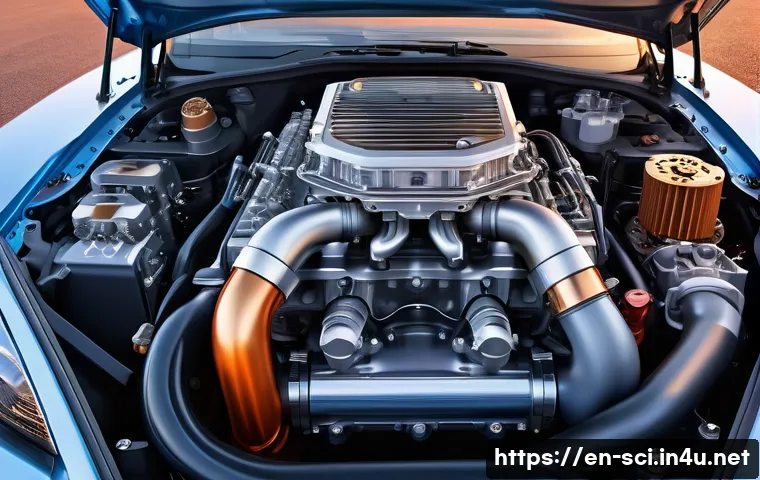
Heat engines are all around us, powering everything from cars to power plants. At their core, they transform heat energy into mechanical work by exploiting temperature differences.
Imagine your car’s engine: it burns fuel to create high-temperature gases that expand and push pistons. This process is governed by fundamental energy conversion principles that set limits on how efficiently the engine can perform.
Understanding this helps engineers design more fuel-efficient engines and reduce waste. In real life, no engine is perfect—there’s always some energy lost as heat to the surroundings, which means the engine’s efficiency can never reach 100%.
Why Temperature Differences Matter
The key driver behind any heat engine’s work is the temperature difference between the heat source and the heat sink. Think of it as the push and pull that creates movement.
The larger this difference, the more potential there is to extract work. For instance, a power plant uses hot steam and cool water to generate electricity.
If the temperature gap shrinks, less work can be extracted, and efficiency drops. This principle underlines why extreme temperature systems, like jet engines, can achieve higher efficiencies—they operate with much hotter combustion temperatures compared to everyday engines.
Challenges in Maximizing Engine Efficiency
While increasing temperature differences sounds ideal, practical limits exist. Materials can only withstand certain temperatures before degrading. Safety, cost, and environmental concerns also restrict how hot or cold parts of the engine can get.
Additionally, friction and other irreversibilities inside the engine reduce the useful work output. Engineers constantly balance these factors, striving to push efficiency boundaries while maintaining durability and safety.
This dance between theoretical maximum efficiency and real-world constraints is what makes engine design such a fascinating challenge.
Decoding the Fundamental Energy Flow Principles
Energy Conservation in Closed Systems
At the heart of all thermodynamic processes is the principle of energy conservation. It states that energy cannot be created or destroyed, only transformed.
When you heat a pot of water, the energy you supply changes the water’s internal energy and may cause it to boil, but the total energy remains constant.
This principle helps us track energy flows in systems, ensuring that every joule is accounted for. It’s a powerful tool not only in physics but also in engineering, as it provides a foundation for designing systems that manage energy efficiently.
The Unavoidable Increase of Entropy
Entropy is a concept that often trips people up, but it’s essentially a measure of disorder or randomness. In natural processes, entropy tends to increase, meaning systems move towards more disorganized states.
For example, when heat flows from a hot object to a cold one, the overall entropy rises. This increase explains why some processes are irreversible, like why you can’t unmix cream from coffee once stirred.
This law shapes the limits of energy conversion and efficiency, reminding us that perfect energy recycling is impossible in the real world.
Balancing Heat and Work in Energy Exchanges
Energy transfer in thermodynamic systems happens in two main ways: heat and work. Heat involves energy transfer due to temperature differences, while work involves force acting over a distance.
For example, in a piston engine, expanding gases do work by pushing the piston, while heat may flow into or out of the system depending on the cycle stage.
Understanding how these two forms interact and convert is crucial for predicting system behavior and optimizing performance. The interplay between heat and work defines the heart of thermodynamic cycles.
Unpacking the Classic Idealized Cycle
What Makes an Ideal Cycle Special?
Ideal cycles are theoretical models that help us understand the limits of real-world engines. They assume perfect conditions, like no friction, reversible processes, and infinite time for heat transfer.
The classic ideal cycle represents the most efficient way to convert heat into work between two temperature reservoirs. By studying this model, we learn the best possible efficiency any engine could achieve under ideal circumstances, setting a benchmark for engineers to compare against.
Step-by-Step Breakdown of the Cycle Phases
This cycle usually involves four distinct steps: two isothermal (constant temperature) and two adiabatic (no heat exchange) processes. During isothermal expansion, the system absorbs heat from the hot reservoir and does work on its surroundings.
Then, adiabatic expansion lowers the temperature without heat exchange. Next, isothermal compression releases heat to the cold reservoir, and finally, adiabatic compression raises the system back to its initial state.
Each phase contributes to the cycle’s overall efficiency and helps illustrate the balance between energy input and output.
Real-World Implications and Limitations
While the ideal cycle provides a perfect theoretical framework, actual engines cannot replicate it exactly. Factors like friction, finite heat transfer rates, and material constraints introduce inefficiencies.
Still, the ideal cycle guides engineers by highlighting where improvements can be made, such as reducing heat losses or optimizing compression ratios.
It also deepens our understanding of why certain efficiency limits exist and how close real engines can approach these limits.
Exploring the Impact of Entropy on System Efficiency
Entropy Production and Its Consequences
Every real process produces entropy, which is essentially energy dispersal that cannot be converted into work. This entropy production is responsible for wasted energy in engines and refrigerators.
When you feel the engine block getting hot, that’s energy lost to entropy. The challenge in thermodynamics is minimizing this entropy production to improve efficiency.
Engineers use insulation, optimized designs, and advanced materials to reduce entropy generation and reclaim as much useful energy as possible.
Entropy and the Arrow of Time
Entropy doesn’t just affect engines; it’s a fundamental reason why time seems to flow in one direction. Processes naturally move from ordered to disordered states, which is why broken eggs don’t spontaneously reassemble.
This concept influences everything from physics to philosophy and explains the irreversibility of many natural phenomena. Understanding entropy helps us grasp why perpetual motion machines are impossible and why energy transformations always have some cost.
Strategies to Control Entropy in Engineering Systems
While entropy can’t be eliminated, its impact can be managed. Engineers design heat exchangers to maximize heat recovery, use regenerative braking in cars to capture wasted energy, and develop materials that withstand higher temperatures to reduce energy losses.
These strategies help push the boundaries of efficiency and sustainability. By accepting the laws of entropy but cleverly working within them, we continue to innovate and improve our energy systems.
Comparing Efficiency Limits Across Different Technologies
Understanding Theoretical Versus Practical Efficiency
The theoretical maximum efficiency of heat engines depends solely on the temperature difference between heat reservoirs. However, practical efficiencies often fall short due to mechanical losses, heat leaks, and other imperfections.
For instance, while a modern car engine might have a maximum theoretical efficiency around 40%, real-world figures are closer to 25-30%. Recognizing this gap helps set realistic goals for technology development and focuses efforts on reducing specific losses.
How Renewable Energy Systems Fit In
Renewable technologies like solar thermal power plants also rely on thermodynamic principles but often operate at lower temperatures, limiting efficiency.
However, their sustainability and low environmental impact offer huge advantages. Innovations in materials and hybrid systems aim to improve their thermodynamic performance.
By balancing efficiency with environmental goals, these technologies represent a crucial part of our energy future.
Efficiency Across Common Devices
Everyday appliances, from refrigerators to air conditioners, also follow thermodynamic limits. Their efficiency is measured by coefficients of performance rather than engine efficiencies, but the underlying laws remain the same.
Understanding these principles helps consumers make smarter choices and manufacturers design better products that save energy and reduce bills.
| Device | Typical Efficiency or Performance | Operating Temperature Range | Key Limiting Factors |
|---|---|---|---|
| Car Engine | 25-30% | Up to 900°C (combustion) | Friction, heat loss, incomplete combustion |
| Power Plant Turbine | 35-45% | 500-600°C (steam) | Material limits, heat exchanger losses |
| Solar Thermal Plant | 15-25% | 200-400°C (solar heat) | Low temperature, heat transfer inefficiency |
| Refrigerator | Coefficient of Performance 2-4 | -20°C to 40°C (cooling) | Compressor efficiency, insulation quality |
Real-World Examples of Thermodynamic Cycles
Automotive Engines and Their Cycles
Most car engines operate on variations of the Otto or Diesel cycles, both rooted in thermodynamic principles. The Otto cycle is common in gasoline engines, involving rapid combustion and expansion to produce power.
Diesel engines use compression ignition, allowing for higher efficiency and torque. Both cycles showcase how manipulating pressure, volume, and temperature in precise ways results in useful mechanical work, while also highlighting the trade-offs involved in fuel type, emissions, and performance.
Refrigeration and Air Conditioning Cycles
Refrigerators and air conditioners rely on thermodynamic cycles that move heat from cold to hot areas using work input. The vapor-compression cycle is the most widely used, involving evaporation, compression, condensation, and expansion of a refrigerant.
This cycle is a practical application of the second law of thermodynamics, as it requires external energy to transfer heat against a temperature gradient.
Improvements in refrigerants and compressor technology continue to enhance system efficiency and reduce environmental impact.
Emerging Technologies and Cycle Innovations
New thermodynamic cycles are constantly being explored to improve efficiency or adapt to alternative energy sources. Examples include the Brayton cycle for jet engines and combined cycles that integrate gas and steam turbines for power generation.
Researchers also investigate supercritical and regenerative cycles to push beyond traditional limits. These innovations represent the ongoing evolution of thermodynamics in response to modern energy challenges.
Thermodynamics in Everyday Life: Practical Insights
Why Your Coffee Cools Down
Thermodynamics isn’t just about engines; it explains everyday phenomena like why hot coffee cools over time. Heat flows from the hotter coffee to the cooler air until temperatures equalize, increasing overall entropy.
This simple example connects microscopic molecular motion to the macroscopic experience of temperature change. Understanding this helps in designing better insulation for thermal mugs or even building climate control systems.
Energy Efficiency Tips for Home Appliances
Knowing how thermodynamics governs energy use can empower smarter choices at home. For example, refrigerators work best when not overloaded and regularly defrosted to minimize entropy production inside.
Air conditioners should be sized appropriately and maintained to reduce unnecessary work input. Small changes like sealing windows and using energy-efficient bulbs reduce the overall energy demand, aligning everyday habits with thermodynamic principles to save money and reduce environmental impact.
How Thermodynamics Shapes Future Technologies
The principles we’ve discussed lay the groundwork for exciting developments in energy storage, conversion, and management. From better batteries to hydrogen fuel cells and beyond, all these technologies rely on thermodynamic laws.
By mastering these fundamentals, innovators can design systems that are not only efficient but sustainable, helping tackle climate change and energy scarcity.
It’s a reminder that the science behind heat and work continues to power progress in countless ways.
Conclusion
Understanding the role of heat engines and thermodynamic principles is essential for advancing energy conversion technologies. From everyday appliances to large-scale power plants, these concepts shape how efficiently we use energy. While theoretical models provide a benchmark, practical challenges require innovative solutions. Embracing these ideas helps us create more sustainable and efficient systems for the future.
Useful Information to Know
1. Heat engines convert heat into mechanical work by exploiting temperature differences, but no engine can be 100% efficient due to inevitable energy losses.
2. The temperature gap between the heat source and sink directly influences engine efficiency—larger differences generally mean higher efficiency.
3. Entropy always increases in real processes, limiting energy conversion and causing some energy to become unusable.
4. Practical engine designs balance material limits, safety, and cost while striving to minimize friction and heat loss.
5. Everyday devices like refrigerators and air conditioners follow thermodynamic laws, and optimizing their use can lead to significant energy savings.
Key Takeaways
Heat engines operate within physical and material constraints that prevent perfect efficiency, but understanding thermodynamics enables continuous improvement. The second law of thermodynamics, especially entropy, dictates the fundamental limits of energy conversion. By managing heat flow, minimizing entropy production, and innovating cycle designs, engineers enhance performance across various technologies. Awareness of these principles empowers better energy use in both industrial and everyday contexts.
Frequently Asked Questions (FAQ) 📖
Q: What is the Carnot cycle and why is it important in thermodynamics?
A: The Carnot cycle is a theoretical model that describes the most efficient way to convert heat into work or vice versa using a heat engine operating between two temperature reservoirs.
It’s important because it sets the upper limit on the efficiency that any real engine can achieve. By understanding the Carnot cycle, engineers and scientists can gauge how close actual devices come to this ideal and find ways to improve energy conversion processes.
It’s like having a gold standard for efficiency that helps guide innovation in engines, refrigerators, and more.
Q: How do the laws of thermodynamics affect everyday machines like engines and refrigerators?
A: The laws of thermodynamics govern how energy moves and transforms, which directly influences how machines work. For example, the first law—the conservation of energy—tells us energy can’t be created or destroyed, only converted, so engines and refrigerators must manage energy carefully to function.
The second law introduces the concept of entropy, meaning energy transformations aren’t 100% efficient and some energy is always lost as waste heat. This is why engines can’t run forever without fuel and refrigerators require continuous input of electricity.
These laws shape design limits and performance expectations for all energy-related technologies.
Q: Why is entropy such a crucial concept in understanding thermodynamics and energy efficiency?
A: Entropy measures the disorder or randomness in a system, and it helps explain why energy transformations are never perfectly efficient. When heat flows from hot to cold, entropy increases, indicating irreversible processes and energy dispersal.
This concept is crucial because it reveals why perpetual motion machines are impossible and why some energy always dissipates as unusable heat. By grasping entropy, we better understand the natural direction of processes and why engineers must work within these limits to optimize energy use, making it a cornerstone of both theoretical and practical thermodynamics.