Hey there, space explorers and cosmic dreamers! Have you ever looked up at the endless night sky and just felt that profound sense of wonder, imagining humanity’s incredible journey among the stars?
I know I do. It’s easy to feel overwhelmed by the sheer scale of the universe and wonder how we manage to send our incredible spacecraft across such mind-boggling distances, especially with the limited fuel we can carry.
But what if I told you that we’ve found a truly ingenious way to harness the universe’s own mechanics to give our missions an epic boost, quite literally turning planets into cosmic slingshots?
It’s a game-changer, folks, and frankly, it’s one of the coolest things I’ve learned about space travel. This clever technique not only saves tons of precious fuel but also allows our probes to reach far-flung destinations that would otherwise be completely out of reach.
From historic voyages like Voyager to groundbreaking current missions like the Europa Clipper, which recently performed a crucial Mars gravity assist to set its course for Jupiter, these celestial ballet moves are absolutely fundamental to our ongoing quest to uncover the universe’s deepest secrets.
It’s like riding a supercharged wave through the solar system, making the impossible possible! I’ve been fascinated by how these maneuvers enable us to explore farther and faster than ever before.
Let’s delve into exactly how this incredible process works and what it means for the future of space exploration.
Understanding the Cosmic Kickstart: How it All Works
The Planet’s Tug: A Dance of Gravity
Have you ever tried to push a friend on a swing, and with just the right timing, they go soaring much higher than you thought possible? That’s kind of what a gravity assist feels like for a spacecraft, only on a truly mind-boggling scale across the cosmos!
When a spacecraft approaches a massive body like a planet, it doesn’t just passively get pulled in; it interacts dynamically with that planet’s gravitational field.
Think of it this way: as the spacecraft gets closer, the planet’s gravity grabs hold, pulling the probe in and making it speed up, almost like a ball rolling downhill.
But here’s where the magic really happens – the spacecraft doesn’t just fall; it swings around the planet and then is flung back out. This “slingshot” effect happens because the planet itself is moving, orbiting the Sun at an incredible speed.
The spacecraft essentially “borrows” some of that orbital momentum from the planet, gaining speed or changing direction relative to the Sun. It’s a cosmic dance where our little probe becomes a temporary partner with a celestial giant, harnessing its colossal energy for our exploration goals.
I always find it absolutely fascinating how this intricate ballet can literally reshape a mission’s destiny!
Borrowing Momentum: The Orbital Energy Exchange
Now, I know what some of you might be thinking: “Doesn’t this violate the conservation of energy?” And trust me, that’s a common question, and one I pondered myself when I first learned about this.
But nope, physics isn’t being broken here! From the planet’s perspective, the spacecraft comes in, speeds up as it gets close, and then slows down to the same speed as it leaves.
So, relative to the planet, no net speed gain. But here’s the kicker: the *planet itself is moving* around the Sun. When the spacecraft swings past and gains speed, it’s actually taking a tiny, infinitesimal amount of momentum from the planet’s orbital motion.
Because planets are so incredibly massive compared to our little probes, this “theft” of momentum is completely negligible for the planet, like a mosquito trying to slow down a freight train!
But for the spacecraft, it’s a monumental boost, propelling it much faster or on a completely different path relative to the Sun. It’s like hitting a baseball with a bat; the bat (planet) transfers momentum to the ball (spacecraft), sending it flying faster and in a new direction.
This clever exchange is the heart of the gravity assist, allowing us to stretch our limited fuel resources and reach destinations that would otherwise be practically impossible.
Engineering Marvels: Crafting the Perfect Trajectory
Precision Planning: More Than Just a Flyby
You might imagine a spacecraft just randomly stumbling upon a planet and getting a boost, but trust me, it’s far from random! These maneuvers are the result of years, sometimes even decades, of meticulous planning by some of the smartest engineers and scientists on Earth.
We’re talking about mind-boggling calculations, ensuring that the spacecraft hits a tiny “keyhole” in space and time to interact with the planet’s gravity just so.
The timing has to be absolutely perfect, often down to the second, because the planets certainly aren’t going to wait around for us! It’s like a cosmic game of billiards, where every shot, every angle, and every velocity has to be precisely calculated to send the cue ball (our spacecraft) exactly where we want it to go, sometimes several banks and bounces later.
I’ve always been in awe of the sheer brainpower that goes into orchestrating these celestial ballets.
The Oberth Effect: A Bonus Boost
And if you thought gravity assists were clever, let me tell you about another little trick in the book: the Oberth effect. This isn’t strictly a gravity assist itself, but it can be used in tandem to supercharge the maneuver.
The Oberth effect basically states that firing your engines when you’re moving at your fastest – which, during a gravity assist, is when you’re closest to the massive planet (at periapsis) – gives you a much more efficient thrust.
It’s like trying to get a running start before jumping; you’ll jump much farther than if you started from a standstill. So, when a spacecraft is hurtling around a planet at top speed due to its gravitational pull, a small burn of its engines at that precise moment yields a disproportionately large increase in velocity.
This essentially allows mission planners to maximize the “free” speed gained from the gravity assist, squeezing every last bit of performance out of their propulsion systems.
It’s truly taking space travel to the next level of ingenuity!
Unlocking Distant Worlds: Iconic Missions and Their Slingshots
Voyager’s Grand Tour: Beyond Our Solar System
When we talk about gravity assists, the Voyager missions are usually the first ones that come to mind, and for good reason! Launched in 1977, Voyager 1 and Voyager 2 embarked on a “Grand Tour” of the outer solar system, a feat that would have been impossible without the cunning use of gravity assists.
Voyager 2, for example, took advantage of a rare planetary alignment that happens only once every 175 years! It used Jupiter’s immense gravity to slingshot to Saturn, then Saturn’s to Uranus, and finally Uranus’s to Neptune, becoming the only spacecraft ever to visit these ice giants.
These maneuvers didn’t just change direction; they imparted enough velocity for both Voyagers to eventually escape the Sun’s gravitational pull altogether, sending them hurtling into interstellar space.
Just imagine the thrill of those scientists watching as their probes gained the speed needed to literally leave our solar system – it must have been an incredible moment!
Cassini and Galileo: Saturn’s Secrets and Jupiter’s Moons
Beyond the Voyagers, countless other trailblazing missions have relied on gravity assists. The Cassini-Huygens mission to Saturn is a prime example of a highly complex trajectory.
Launched in 1997, Cassini took a scenic route through the solar system, getting two boosts from Venus, one from Earth, and another from Jupiter to gain the monumental speed required to reach Saturn.
This multi-planet ballet allowed it to arrive at the ringed planet in 2004, where it spent over a decade unraveling its mysteries. Similarly, the Galileo spacecraft, on its journey to Jupiter in 1989, performed a Venus flyby and two Earth flybys to build up speed.
These assists not only saved vast amounts of fuel but also allowed Galileo to visit asteroids like Gaspra and Ida along the way, adding extra scientific value to its already ambitious mission.
It really shows how versatile and powerful these techniques are for deep space exploration.
The Europa Clipper’s Epic Journey: A Modern Gravity Assist Saga
Mars and Earth: Celestial Stepping Stones
Fast forward to today, and gravity assists are still at the heart of our most ambitious missions. Take NASA’s Europa Clipper, for instance. This incredible spacecraft, launched in October 2024, is on a critical mission to investigate Jupiter’s icy moon Europa, a place many scientists believe could harbor a subsurface ocean and potentially life.
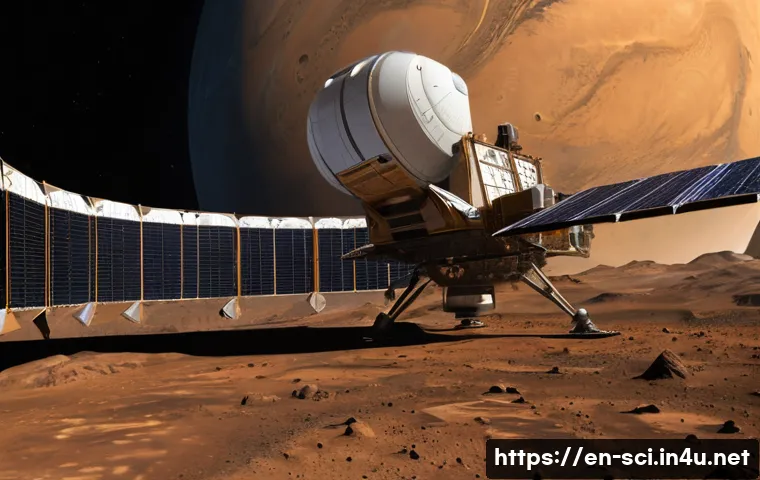
Getting there efficiently is no small feat. That’s why, on March 1, 2025, Europa Clipper executed a crucial gravity assist maneuver around Mars, passing just 550 miles (884 kilometers) above its surface.
This Martian slingshot helped adjust its trajectory and slowed its speed relative to the Sun, perfectly setting it up for its next big boost. Looking ahead, another pivotal gravity assist around Earth is scheduled for December 2026.
It’s truly fascinating to see these cosmic billiards shots played out in real-time with our latest generation of explorers!
Unveiling Europa’s Mysteries: The Mission Ahead
These celestial assists are absolutely essential because, without them, the Europa Clipper mission would either need significantly more propellant – adding immense weight and cost to the launch – or take a much longer, less efficient route to Jupiter.
After its Earth flyby in 2026, it’s a more direct shot to the outer solar system, with arrival at Jupiter’s orbit anticipated in April 2030. Once there, the Europa Clipper won’t orbit Europa directly but will perform nearly 50 close flybys, sometimes as low as 16 miles (25 kilometers) above the moon’s surface.
Its primary goals are to determine the thickness of Europa’s icy shell, study its composition, and characterize its geology – all to assess its potential for harboring life.
It’s a testament to human ingenuity that we can use the universe’s own mechanics to reach such far-flung, fascinating destinations!
Beyond the Horizon: The Future of Interplanetary Road Trips
Enabling Ambitious Goals: From Asteroids to Interstellar Space
The gravity assist isn’t just a historical footnote; it remains an indispensable tool for the future of space exploration. As we dream of even more ambitious missions – perhaps to the distant ice giants beyond Neptune, to specific asteroids for resource extraction, or even laying the groundwork for true interstellar probes – the gravitational slingshot will be absolutely central to making those dreams a reality.
These maneuvers allow us to design missions with incredibly complex profiles, redirecting spacecraft to multiple targets within a single mission, thus maximizing scientific return.
For instance, the upcoming ESCAPADE mission, while aimed at Mars, will use Earth gravity assists in 2026 after waiting at a Lagrange point, showcasing how these techniques enable more flexible launch windows.
It’s about being smarter, not just bigger, with our rockets.
Flexibility and Efficiency: The Continuing Evolution
One of the most profound benefits of gravity assists is the sheer flexibility they offer mission planners. Imagine the challenge of launching a spacecraft directly to a distant planet, needing enough fuel for every single course correction and speed change along the way.
It would be a monumental, and likely unaffordable, endeavor. Gravity assists fundamentally change this equation, allowing us to conserve precious onboard fuel for fine-tuning maneuvers or for extended operations once at the destination.
This translates directly into lighter spacecraft, smaller rockets, and ultimately, reduced mission costs. This constant drive for efficiency means that every time we learn more about orbital mechanics and refine our trajectory calculations, we open up new possibilities for where and how far we can explore.
It’s a continuous evolution, pushing the boundaries of what’s possible in our cosmic backyard and beyond.
The Hidden Perks and Tricky Bits of Cosmic Surfing
Saving Fuel, Extending Reach: The Economic Advantage
Let’s be real, space travel is expensive. Every pound of propellant we have to launch into space adds to the cost. This is where gravity assists shine, offering an almost “free” way to change a spacecraft’s speed and direction without burning a drop of precious fuel.
Think of the savings! This fuel efficiency means we can either use smaller, cheaper rockets to launch missions, or pack more scientific instruments and experiments onto a larger spacecraft, dramatically increasing its scientific payload.
It also enables longer mission durations, allowing probes to spend more time studying their targets or venturing farther into the solar system. The Voyagers, for example, couldn’t have reached interstellar space without these boosts.
From a practical, economic standpoint, gravity assists are an absolute game-changer, making otherwise impossible missions feasible.
The Downsides: Planning Pitfalls and Mission Duration
Now, while gravity assists are amazing, they aren’t without their quirks and challenges. The biggest one, in my experience, is the incredibly rigid mission planning they demand.
Planets aren’t always aligned perfectly, meaning you often have very specific, limited launch windows. Missing one could mean waiting years, or even decades, for the next opportunity.
And during that often lengthy transit time, a lot can go wrong. The longer a spacecraft is in transit, the higher the risk of component failures, cosmic ray damage, or other unforeseen issues.
Plus, the extended mission duration means more time and resources spent on ground control, tracking, and maintaining the probe. And let’s not forget the sheer complexity of the calculations; botching a gravity assist can send your expensive probe off into the void, far from its intended target, without a chance for a do-over.
It’s a high-stakes game of cosmic chess, but the rewards are almost always worth the effort.
Debunking the Myths: What Gravity Assist Isn’t
It’s Not “Free Energy”
Alright, let’s clear up a couple of common misunderstandings about gravity assists, because the physics here, while elegant, can sometimes feel a bit counter-intuitive.
First off, it’s not “free energy” in the sense that something is being created from nothing. As we discussed, the spacecraft is actually taking a minuscule amount of orbital energy from the planet.
This adheres strictly to the laws of physics, specifically the conservation of energy and momentum. When you look at the system as a whole – the spacecraft, the planet, and the Sun – the total energy remains constant.
What changes is the distribution of that energy, with the spacecraft gaining speed relative to the Sun at the planet’s expense. I’ve heard people talk about it like perpetual motion, but it’s really just a very clever transfer of existing energy!
Planets Don’t Stop Moving for Us
Another misconception I’ve encountered is the idea that the planet somehow acts as a stationary anchor that the spacecraft just whips around. Nope, not at all!
The planet itself is constantly in motion, hurtling around the Sun. The whole trick is leveraging that motion. Imagine trying to get a boost from a moving car; you’d have to interact with it while it’s in motion, not when it’s parked.
Similarly, if the planet weren’t orbiting the Sun, a spacecraft would just accelerate towards it and then decelerate away from it, leaving with the same speed relative to the Sun it had when it approached.
The key, and what makes it such a powerful tool, is the planet’s own orbital velocity, which acts like a giant, cosmic paddleball game, giving our probes an extra push.
It’s a beautiful demonstration of how we can use the universe’s own fundamental forces to navigate its vastness.
| Mission Name | Key Gravity Assist Planets | Primary Destination / Achievement |
|---|---|---|
| Voyager 1 | Jupiter, Saturn | First spacecraft to visit Jupiter and Saturn; entered interstellar space. |
| Voyager 2 | Jupiter, Saturn, Uranus, Neptune | First and only spacecraft to visit Uranus and Neptune; entered interstellar space. |
| Cassini-Huygens | Venus (x2), Earth, Jupiter | Explored Saturn and its moons for over a decade. |
| Galileo | Venus, Earth (x2) | Explored Jupiter and its moons; flew past asteroids Gaspra and Ida. |
| Mariner 10 | Venus | First to visit Mercury and use gravity assist to reach another planet. |
| New Horizons | Jupiter | First to perform a flyby of Pluto and Kuiper Belt object Arrokoth. |
| Europa Clipper | Mars, Earth (scheduled) | Mission to investigate Jupiter’s moon Europa for habitability. |
Concluding Thoughts
And there you have it, folks! From the daring Grand Tour of the Voyagers to the meticulous planning behind the Europa Clipper, gravity assists are undeniably one of humanity’s most ingenious solutions for exploring the vastness beyond our home planet. It’s a testament to our ability to understand and harness the fundamental laws of physics, turning seemingly insurmountable distances into achievable journeys. Every time I read about these cosmic slingshots, I’m filled with a sense of wonder and immense pride in what we, as a species, can accomplish. It truly feels like we’re riding the universe’s own waves to uncover its deepest secrets, and frankly, that’s just incredibly cool.
Handy Tips and Further Insights
1. If you’ve ever wondered how spacecraft actually navigate these incredibly precise trajectories, dive into the world of celestial mechanics and orbital dynamics. It’s a fascinating field that blends advanced mathematics with the elegant physics of gravity. You’ll find that engineers aren’t just guessing; they’re solving incredibly complex equations, often using supercomputers to map out paths that minimize fuel consumption and optimize travel time. Understanding the basics of Kepler’s laws or Newton’s law of universal gravitation can give you a profound appreciation for the “cosmic ballet” we’ve been discussing. Many universities offer free online courses or lectures on these topics, which are truly a treat if you’re a science enthusiast like me. It’s not just about getting from point A to point B; it’s about doing it with unparalleled grace and efficiency, truly making every joule of energy count in the unforgiving vacuum of space. Learning about Lagrange points, for instance, reveals even more clever tricks for station-keeping and fuel savings in multi-body systems, proving that the universe is full of orbital shortcuts waiting to be exploited by clever human minds. These are the kinds of details that keep me glued to space news!
2. Considering how crucial gravity assists are, you might want to explore the history of space mission design. Missions like Mariner 10, which first visited Mercury, pioneered the use of Venus as a gravitational slingshot, proving the concept in a real-world scenario. Reading about the challenges and triumphs of those early missions provides a fantastic context for current endeavors. You’ll see how each successful mission built upon the knowledge gained from its predecessors, gradually refining these techniques. It really makes you appreciate the shoulders of giants we stand on in space exploration. For me, tracing the evolution of these strategies highlights the iterative nature of scientific progress – always learning, always improving, always pushing the boundaries of what’s possible with the tools and understanding we have at hand. It’s a story of human perseverance, brilliant problem-solving, and a relentless curiosity that has propelled us to the stars, one slingshot at a time.
3. Ever thought about the impact of these missions on everyday life? While you might not immediately connect a Jupiter flyby to your smartphone, the technologies developed for space exploration, including advanced materials, precise navigation systems, and miniaturized electronics, often find their way back to Earth, enhancing our daily lives in unexpected ways. Think about the GPS in your car or phone – it relies on incredibly precise atomic clocks developed for satellite navigation. Medical imaging, weather forecasting, even certain types of insulation have roots in space research. The pursuit of understanding distant worlds inadvertently fuels innovation right here at home. So, next time you marvel at a mission to Saturn, remember that the ripple effects of that ingenuity are likely touching your life in ways you might not even realize. It’s a powerful reminder that investing in fundamental science and exploration yields tangible benefits far beyond the initial scope of the project. We’re not just exploring space; we’re also inadvertently accelerating progress on Earth.
4. If you’re keen on following current and future space missions that heavily rely on gravity assists, keep an eye on NASA and ESA’s mission pages. They frequently update their blogs and news sections with trajectory details, launch windows, and upcoming planetary flybys. For instance, the upcoming Dragonfly mission to Titan will utilize a Venus and Earth gravity assist sequence to reach Saturn’s moon. Being able to track these maneuvers in real-time, sometimes with live broadcasts from mission control, is an absolutely thrilling experience. It’s like watching a cosmic chess game unfold, where every move is calculated years in advance. Understanding when and where these crucial assists happen gives you a deeper appreciation for the operational complexities and the sheer genius involved in orchestrating these interplanetary journeys. I personally subscribe to several space news newsletters just to stay updated on these incredible feats of engineering and navigation.
5. Finally, let’s touch upon the “why” of it all – why do we even bother with these complex, multi-year journeys? Beyond the sheer scientific discovery, exploring our solar system through missions enabled by gravity assists helps us understand our place in the cosmos. It provides crucial data about planetary formation, the potential for life beyond Earth, and even the future of our own planet. These missions are not just about collecting rocks or taking pretty pictures; they are about expanding the horizons of human knowledge and inspiring the next generation of scientists, engineers, and explorers. The feeling of seeing the first close-up images of a distant moon, knowing it took years of careful planning and cosmic surfing to get there, is simply unparalleled. It’s an investment in humanity’s future, fostering innovation and pushing the boundaries of what we collectively believe is possible. This, to me, is the ultimate “why” – the pursuit of the unknown and the expansion of our understanding of the universe.
Key Takeaways
To wrap things up, remember that gravity assists are more than just a clever trick; they are a cornerstone of modern interplanetary travel. This technique leverages the orbital momentum of massive planets to slingshot spacecraft, dramatically increasing their speed and altering their trajectory relative to the Sun, all without consuming precious propellant. It’s a brilliant application of physics that allows us to undertake missions that would otherwise be impossible or prohibitively expensive, opening up our entire solar system for exploration. From the iconic Voyagers that ventured into interstellar space to the Europa Clipper’s quest for alien oceans, these cosmic surf rides are designed with incredible precision, requiring years of meticulous planning by brilliant minds. While they demand perfect timing and pose logistical challenges, the benefits—fuel savings, extended reach, and access to multiple targets—are immense. They are a testament to human ingenuity, allowing us to push the boundaries of discovery and continue our grand journey of understanding the universe, one carefully choreographed planetary dance at a time. It’s truly a game-changer for how we navigate the stars, making the impossible, possible.
Frequently Asked Questions (FAQ) 📖
Q: What exactly is a gravity assist, and how does this “cosmic slingshot” magic actually work?
A: Oh, this is such a cool question, and it’s something I absolutely love talking about! You know that feeling when you’re trying to push a heavy box, but then someone else gives it a little nudge at just the right moment, and suddenly it speeds up?
A gravity assist, or a “planetary slingshot” as we often call it, works on a similar principle, but on a cosmic scale. Imagine a tiny spacecraft hurtling towards a giant, fast-moving planet like Jupiter.
Instead of just flying by, our clever engineers calculate a path that lets the spacecraft dip into the planet’s gravitational field, effectively “stealing” a tiny bit of the planet’s orbital energy.
It’s truly mind-blowing, but as the spacecraft approaches the planet, it speeds up due to the planet’s gravity, and as it swings around and leaves, it gets flung away at an even higher speed, or its direction changes dramatically, without firing its engines.
Think of it like a skateboarder gaining momentum by rolling past a fast-moving truck – the truck hardly slows down, but the skateboarder gets a significant boost!
This incredible dance between gravity and motion is all about conserving momentum and energy across the entire system. It’s not just a free ride; it’s a perfectly choreographed celestial ballet that gives our probes an unbelievable push.
Q: Why are gravity assists such a game-changer for space exploration? What makes them so indispensable for missions?
A: This is where the real genius of gravity assists shines, my friends! If we had to rely solely on our rockets to get to places like the outer planets or beyond, we’d need an insane amount of fuel.
And carrying all that fuel means a heavier spacecraft, which in turn needs even more powerful (and expensive) rockets to lift it off Earth. It’s a bit of a catch-22, right?
Gravity assists solve this massive problem by letting us drastically reduce the amount of fuel we need. Less fuel means lighter spacecraft, which means more room for scientific instruments, cameras, and all the cool tech that gathers those incredible images and data we love to see.
I remember thinking about how Voyager 1 and 2, launched way back in the 70s, used a series of these gravity assists from Jupiter, Saturn, Uranus, and Neptune to basically “surf” their way through the solar system and eventually out into interstellar space.
Without those precise planetary alignments and the clever use of gravity, those epic grand tours simply wouldn’t have been possible. They allow us to reach destinations that would otherwise be completely out of our reach, and they significantly cut down on travel times, turning years-long journeys into something more manageable.
It’s like getting a free, super-fast express lane ticket across the cosmic highway!
Q: Sounds amazing, but are there any catches? What are the biggest challenges or limitations when using gravity assists?
A: That’s a super smart question to ask, because while gravity assists are incredibly powerful, they’re definitely not a walk in the park. One of the biggest challenges, and honestly, it keeps mission controllers up at night, is the sheer precision required.
We’re talking about calculating trajectories so exact that missing by even a tiny fraction of a degree or a few seconds in timing could send a multi-billion-dollar mission completely off course.
It’s like trying to hit a moving bullseye from thousands of miles away! Another huge limitation is planetary alignment. You can only do a gravity assist if the planets are in the right place at the right time.
This means mission planners often have to wait years, sometimes even decades, for the perfect “launch window” when the target planet and the assisting planets are all lined up just so.
Missing that window means a long delay, or sometimes, redesigning the entire mission. And let’s not forget about the risks: getting too close to a planet can expose a spacecraft to intense radiation belts, or if the approach is too low, the atmosphere could cause unwanted drag.
So, while these maneuvers are absolutely essential, they demand an incredible amount of expertise, meticulous planning, and frankly, a bit of cosmic luck for everything to line up perfectly.
It’s high-stakes stuff, but the payoff for exploration is absolutely worth every nail-biting moment!